
Convolutional Neural Network for Soil Surface Image Classification in Six Soil Categories
##plugins.themes.bootstrap3.article.sidebar##
##plugins.themes.bootstrap3.article.main##
Abstract
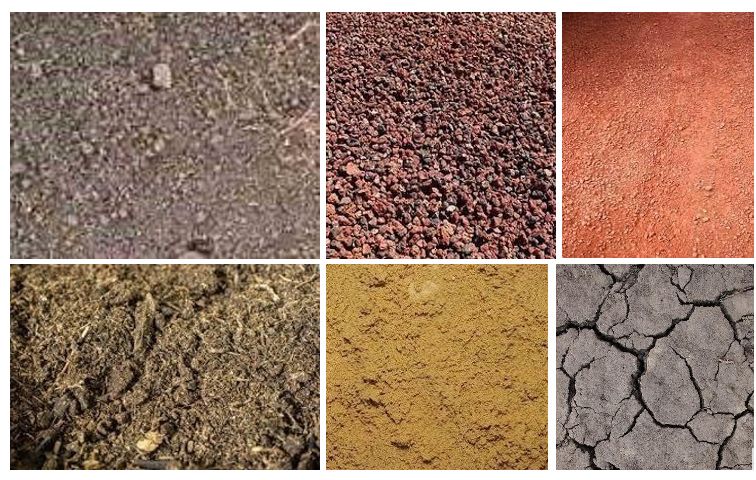
Soil type classification is important for agriculture, geology, and civil engineering because soil characteristics influence land suitability, tillage strategy, irrigation, fertilization, and foundation stability. However, manual soil identification through field observation or laboratory analysis can be time-consuming and may introduce subjective errors. This study proposes an automated soil image classification approach using a Convolutional Neural Network (CNN). The dataset comprises six soil categories-black soil (tanah hitam), yellow soil (tanah kuning), peat soil (tanah gambut), cinder/volcanic soil (tanah vulkanik), laterite soil (tanah laterit), and cracked soil (tanah retak) -collected from a public Kaggle dataset and complemented with web-extracted cracked-soil images. Images are preprocessed through resizing, normalization, and training-time augmentation before being split into training, validation, and testing subsets. Experimental results show that the proposed CNN achieves 91.61% test accuracy and substantially improves performance compared to training without preprocessing. These findings indicate that CNN-based models, supported by appropriate preprocessing, can provide practical decision support for rapid soil type identification under diverse image conditions.
##plugins.themes.bootstrap3.article.details##

This work is licensed under a Creative Commons Attribution-ShareAlike 4.0 International License.
Authors who publish articles in CoreID Journal agree to the following terms:
- Authors retain copyright of the article and grant the journal right of first publication with the work simultaneously licensed under a CC-BY-SA or The Creative Commons Attribution–ShareAlike License.
- Authors are able to enter into separate, additional contractual arrangements for the non-exclusive distribution of the journal's published version of the work (e.g., post it to an institutional repository or publish it in a book), with an acknowledgment of its initial publication in this journal.
- Authors are permitted and encouraged to post their work online (e.g., in institutional repositories or on their website) prior to and during the submission process, as it can lead to productive exchanges, as well as earlier and greater citation of published work (See The Effect of Open Access).
References
E. K. Gyasi and S. Purushotham, “Soil-MobiNet: A Convolutional Neural Network Model Base Soil Classification to Determine Soil Morphology and Its Geospatial Location,” Sensors, vol. 23, no. 15, p. 6709, 2023, doi: 10.3390/s23156709.
A. D. Ronaldo, Hamzah, and M. Diqi, “Effective Soil Type Classification Using Convolutional Neural Network,” International Journal of Informatics and Computation (IJICOM), vol. 3, no. 1, pp. 20–29, 2021, doi: 10.35842/ijicom.v3i1.33.
G. D. Chate and S. S. Bhamare, “Classification of Soil Images Using Convolutional Neural Network,” International Journal of Image, Graphics and Signal Processing, vol. 17, no. 5, pp. 26–41, 2025, doi: 10.5815/ijigsp.2025.05.03.
Y. A. Gerhana, A. R. Atmadja, W. B. Zulfikar, and N. Ashanti, “The implementation of K-nearest neighbor algorithm in case-based reasoning model for forming automatic answer identity and searching answer similarity of algorithm case,” in 2017 5th International Conference on Cyber and IT Service Management (CITSM), IEEE, Aug. 2017, pp. 1–5. doi: 10.1109/CITSM.2017.8089233.
I. Erliana, A. Karim, and Z. Zainabun, “Klasifikasi Tanah Kebun Kopi Arabika di Kabupaten Gayo Lues Berdasarkan Sistem Klasifikasi Soil Taxonomy USDA,” Jurnal Ilmiah Mahasiswa Pertanian, vol. 7, no. 1, pp. 696–703, Feb. 2022, doi: 10.17969/JIMFP.V7I1.19049.
D. Avianto, “Implementasi Ekstraksi Ciri Histogram dan K-Nearest Neighbor untuk Klasifikasi Jenis Tanah di Kota Banjar, Jawa Barat,” Jurnal Buana Informatika, vol. 10, no. 2, pp. 85–98, Oct. 2019, doi: 10.24002/JBI.V10I2.2141.
Y. Yohannes, S. Devella, and A. H. Pandrean, “Penerapan Speeded-Up Robust Feature pada Random Forest Untuk Klasifikasi Motif Songket Palembang,” Jurnal Teknik Informatika dan Sistem Informasi, vol. 5, no. 3, Jan. 2019, doi: 10.28932/JUTISI.V5I3.1978.
M. P. Behera, A. Sarangi, D. Mishra, and S. K. Sarangi, “A Hybrid Machine Learning algorithm for Heart and Liver Disease Prediction Using Modified Particle Swarm Optimization with Support Vector Machine,” Procedia Comput. Sci., vol. 218, pp. 818–827, Jan. 2023, doi: 10.1016/J.PROCS.2023.01.062.
Y. Nugroho Paseneke, A. Nugroho, F. Teknologi Informasi, and U. Kristen Satya Wacana Jl, “Pemetaan dan Klasifikasi Kesesuaian Jenis Tanah Terhadap Tanaman Menggunakan Metode Naïve Bayes di Desa Cukilan,” AITI, vol. 19, no. 2, pp. 199–212, Nov. 2022, doi: 10.24246/aiti.v19i2.199-212.
D. S. Jodas, L. A. Passos, A. Adeel, and J. P. Papa, “PL-kNN: A Python-based implementation of a parameterless k-Nearest Neighbors classifier,” Software Impacts, vol. 15, p. 100459, Mar. 2023, doi: 10.1016/J.SIMPA.2022.100459.
M. A. Jabbar, F. A. Falcata, R. S. Fuadi, A. T. Hidayatuloh, M. T. Laut, and P. Banten, “Analysis of the Level of Satisfaction of Using the Majalengka Digital Samsat Website Using the K-Nearest Neighbor Algorithm,” Journal of Multimedia Technology and Applied Software, vol. 2, no. 1, pp. 46–52, Apr. 2025, doi: 10.71266/JMTAS.V2I1.46.
A. Herdiman, D. S. A. Maylawati, D. R. Ramdania, W. B. Zulfikar, M. I. Al-Amin, and M. A. Ramdhani, “Household Waste Classification with Convolutional Neural Networks (CNN),” 2024 9th International Conference on Informatics and Computing, ICIC 2024, 2024, doi: 10.1109/ICIC64337.2024.10956537.
Y. P. Astuti, E. R. Subhiyakto, I. Wardatunizza, and E. Kartikadarma, “Implementasi Algoritma Convolutional Neural Network (CNN) Untuk Klasifikasi Jenis Tanah Berbasis Android,” Jurnal Informatika: Jurnal Pengembangan IT, vol. 8, no. 3, pp. 220–225, Sep. 2023.
M. El Sakka, M. Ivanovici, L. Chaari, and J. Mothe, “A Review of CNN Applications in Smart Agriculture Using Multimodal Data,” Sensors, vol. 25, no. 2, p. 472, 2025, doi: 10.3390/s25020472.
A. Lab and F. Sheth, “Comprehensive Soil Classification Datasets.” Accessed: Jan. 21, 2025. [Online]. Available: https://www.kaggle.com/datasets/ai4a-lab/comprehensive-soil-classification-datasets